Database Schema
MeetAI uses Neon DB (serverless Postgres) with Drizzle ORM for type-safe schema definitions and queries. The connection uses @neondatabase/serverless Pool driver with full transaction support.
Entity Relationship Diagram
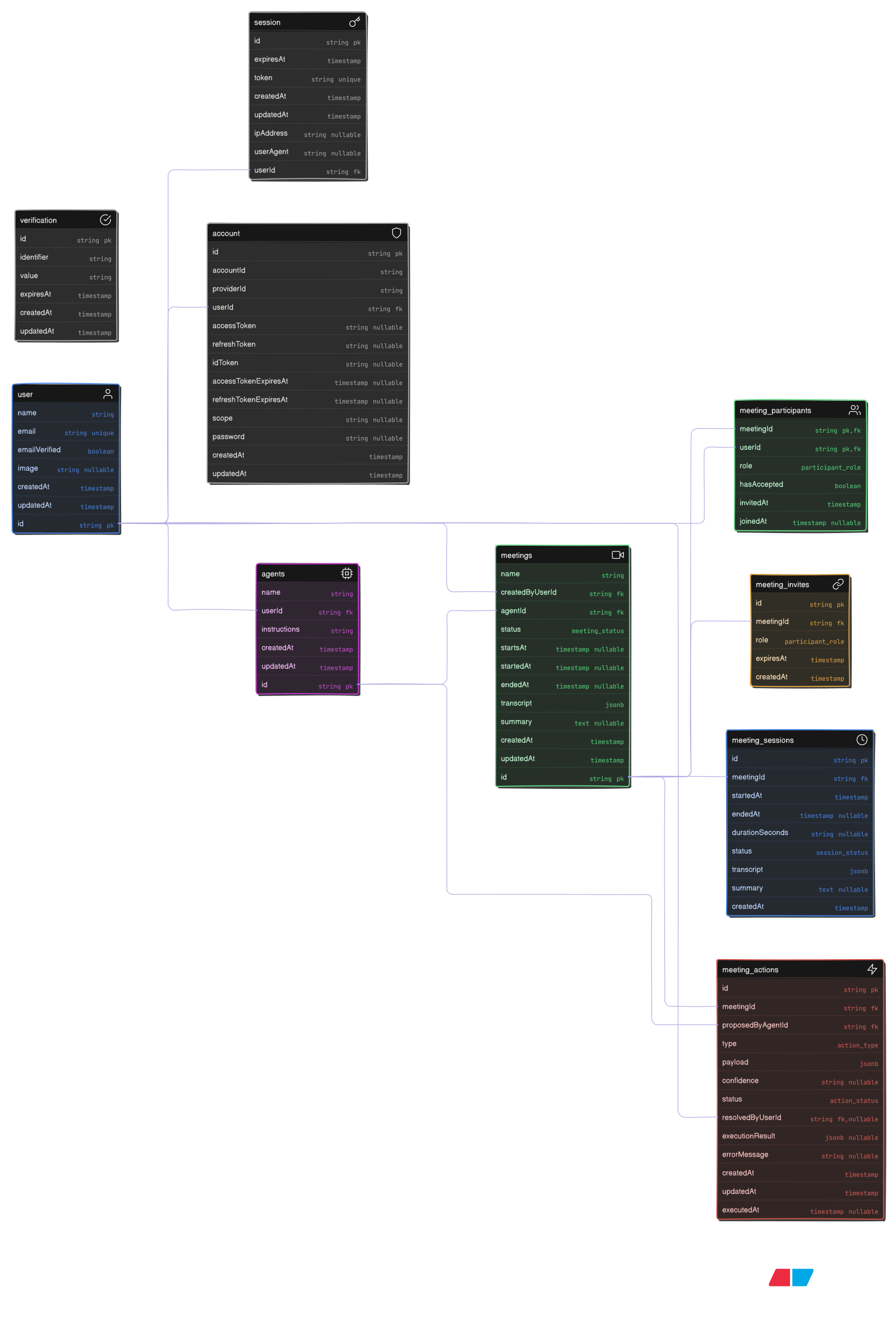
Enums
| Enum | Values | Purpose |
|---|---|---|
meeting_status | upcoming, active, completed, processing, cancelled, abandoned | Tracks meeting lifecycle |
participant_role | host, co_host, attendee, viewer | Role-based access within a meeting |
session_status | active, completed, abandoned, processing | Individual call session state |
action_status | proposed, pending, confirmed, rejected, executing, completed, failed | Human-in-the-loop action lifecycle |
action_type | send_email, create_calendar_event, create_jira_ticket, create_github_issue, post_slack_message | Supported AI-triggered actions |
Key Design Decisions
Transcript stored as JSONB array
export interface TranscriptItem {
  role: "human" | "assistant";
  speaker: AgentId | UserId | "unknownUser";
  text: string;
  timestamp: number;  // epoch ms
}
Why JSONB, not a separate transcript_lines table?
Transcripts are always read and written as a batch per meeting. A JSONB column avoids N+1 query problems, simplifies upserts (array concat via jsonb_set), and keeps the data co-located with the meeting row for fast reads. The trade-off is losing per-line indexing — acceptable because we never query individual transcript lines independently.
Composite Primary Key on meeting_participants
The (meetingId, userId) composite PK enforces that a user can only appear once per meeting — no duplicate joins. This eliminates an entire class of race conditions during invite acceptance.
nanoid() for Primary Keys
All application tables use nanoid() string IDs instead of auto-incrementing integers. This enables:
- Client-side ID generation (optimistic UI)
- URL-safe tokens (invite links use the row ID directly)
- No sequential ID enumeration attacks
Indexes on meeting_actions
CREATE INDEX meeting_actions_meeting_idx ON meeting_actions(meeting_id);
CREATE INDEX meeting_actions_status_idx ON meeting_actions(status);
These cover the two most frequent query patterns:
- “Show all actions for this meeting” (dashboard view)
- “Find all pending actions” (background executor)